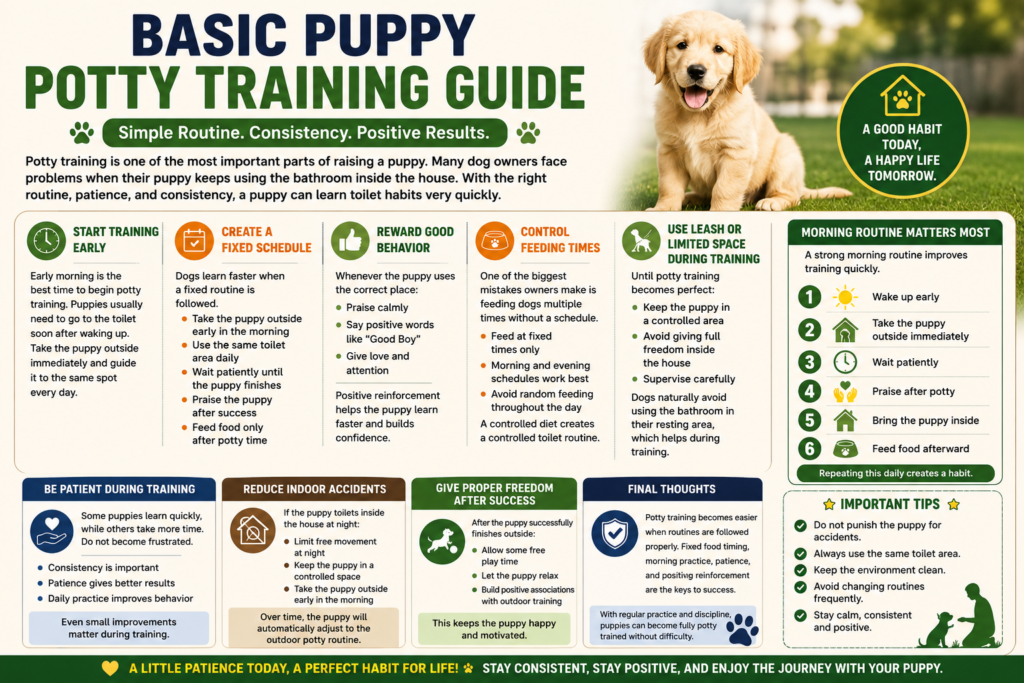
Potty training is one of the most important parts of raising a puppy. Many dog owners struggle when their puppy repeatedly uses the bathroom inside the house. However, with the right routine, patience, and consistency, puppies can learn proper toilet habits very quickly.
A well-trained puppy not only keeps the house clean but also develops better discipline and behavior. The key to successful potty training is creating a proper schedule and following it every single day.
Why Potty Training Is Important
Potty training helps puppies understand:
- Where they should use the bathroom
- What behavior is correct
- How to follow a daily routine
Dogs naturally prefer cleanliness, and once they understand the correct place, they slowly begin avoiding accidents inside the home.
Best Age to Start Potty Training
The best time to start potty training is during the early puppy stage. Young puppies learn habits very quickly, especially when training is started consistently from the beginning.
Early training helps avoid future behavioral problems and makes house management much easier for dog owners.
Create a Fixed Daily Routine
Dogs learn through repetition. A fixed daily routine helps puppies understand what is expected from them.
A good potty training routine includes:
- Waking up early
- Taking the puppy outside immediately
- Using the same potty area daily
- Waiting patiently
- Praising the puppy after success
- Feeding food afterward
When this process is repeated every day, the puppy slowly builds a habit.
Morning Training Is Extremely Important
Morning time is considered the most effective period for potty training because puppies usually need to relieve themselves soon after waking up.
Morning routine steps:
- Wake up early
- Take the puppy outside immediately
- Stay calm and wait patiently
- Let the puppy finish naturally
- Praise the puppy after success
- Bring the puppy back inside
- Feed food after potty time
Following this routine daily creates fast improvement.
Always Use the Same Potty Spot
Consistency is one of the biggest secrets of potty training success.
Taking the puppy to the same location every day helps it recognize the area through smell and habit. Dogs naturally return to familiar toilet spots once they understand the routine.
Changing locations too often can confuse the puppy and slow down training progress.
Reward Good Behavior
Positive reinforcement is very important during training.
Whenever the puppy successfully uses the correct place:
- Praise calmly
- Use positive words
- Give affection and attention
Dogs learn faster when they receive positive reactions for correct behavior.
Be Patient During Training
Some puppies learn within a few days, while others may take several weeks. Every dog has a different learning speed.
Important things to remember:
- Never become angry
- Avoid punishment
- Stay calm and patient
- Repeat training daily
Patience creates trust between the owner and the puppy.
Control Feeding Schedule Properly
Food timing directly affects potty timing.
One common mistake many owners make is feeding puppies randomly throughout the day. This creates an irregular toilet routine and increases indoor accidents.
Better feeding habits:
- Feed at fixed times only
- Maintain morning and evening schedules
- Avoid unnecessary snacks
- Keep portion timing regular
Dogs usually follow a predictable potty routine after eating.
Limit Free Movement During Training
Until the puppy becomes fully potty trained, avoid giving complete freedom inside the house.
During training:
- Keep the puppy supervised
- Use controlled indoor areas
- Prevent access to the entire house
- Observe potty signals carefully
Dogs naturally avoid dirtying their sleeping or resting areas, which helps in training.
Understand Potty Signals
Puppies usually show signs before they need to use the bathroom.
Common signs include:
- Sniffing the floor
- Walking in circles
- Restlessness
- Moving toward corners
- Suddenly leaving playtime
When these signs appear, immediately take the puppy outside.
Reduce Indoor Accidents
Indoor accidents are normal during training. They should be handled calmly.
If accidents happen:
- Clean the area properly
- Do not punish the puppy
- Continue the routine consistently
- Increase supervision
Punishment can create fear and confusion instead of learning.
Night-Time Potty Management
Night-time accidents are very common in young puppies.
To reduce this problem:
- Limit food and water very late at night
- Keep the puppy in a controlled sleeping area
- Take the puppy outside early in the morning
A proper sleep schedule helps improve toilet habits.
Build Positive Habits Slowly
Training should always feel positive and comfortable for the puppy.
After successful potty training outside:
- Allow some free playtime
- Give affection
- Let the puppy relax
This builds confidence and encourages better learning.
Common Mistakes to Avoid
Many owners unknowingly slow down potty training by making simple mistakes.
Avoid these habits:
- Changing routines frequently
- Punishing accidents
- Feeding randomly
- Giving too much freedom early
- Skipping morning potty sessions
- Expecting instant results
Consistency is more important than speed.
How Long Does Potty Training Take?
Every puppy learns differently. Some may improve within days, while others require more time.
Training speed depends on:
- Age
- Routine consistency
- Supervision
- Feeding schedule
- Owner patience
Daily practice creates long-term success.
Final Thoughts
Potty training becomes much easier when owners follow a proper schedule and remain patient throughout the process. Fixed routines, positive reinforcement, supervision, and consistency are the foundations of successful puppy training.
With regular practice and calm guidance, puppies can develop excellent toilet habits and become well-disciplined family companions.